
Sound & Security Quarterly Newsletter:

subscribe to Accu-Tech Sound and Security Quarterly Newsletter

We're On Facebook

Your Connection to the Security Market

Current Articles | RSS Feed RSS Feed

IP versus Analog- Which is Right For Me?


Article written by Accu-Tech Regional Security Specialist Rick Stuart.
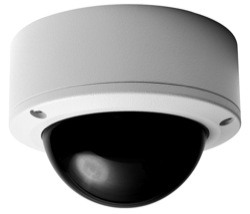
ip camera, pelco

If you are looking to install a security surveillance system at your location, one of the decisions you have to make is whether to go with an IP or analog camera. Deciding on IP versus analog cameras is not necessarily a simple decision as there are advantages and disadvantages to each style of camera. We will explore some of these differences more in-depth so you can determine which option is right for you.

The main difference between the two camera types is the way in which the video signal is delivered. Analog cameras turn the images into a composite video signal that can be received by a television/monitor or recorded on a VCR or DVR (Digital Video Recorder). An IP-based camera, also known as an IP network camera, digitizes the video signal using a specialized encoder that contains an onboard web server. This allows the IP camera to act as a network device, thus allowing captured video images to be viewed not only through an existing network but also through a web browser that can be accessed through the Internet. IP cameras are recorded on a NVR (Network Video Recorder) which is attached to the network.

Both analog and IP-based video cameras can transmit signals either wirelessly or through wired connections such as Cat-5 cables. IP-based cameras have the added benefit of being able to use switches, hubs, routers, or even the internet to allow the network to be expanded to far-reaching locations. In order to determine which style camera system is best suited to your needs, let's take a closer look at some of the pros and cons of each style.

Pros of analog cameras

Lower cost -- Analog cameras generally cost less to purchase than IP cameras.

Greater flexibility of design -- Analog cameras often come in a larger variety of designs such as mini covert cameras to large PTZ models. If you have unique surveillance needs you may find it easier to find the style of camera you need in an analog model.

Superior compatibility -- It is much easier to mix and match cameras and brands if you use analog versions. This can make it easier if you already have existing camera equipment that you wish to incorporate into your surveillance system.

Cons of analog cameras

Lack certain features -- Many of the basic analog cameras often lack some of the more advance features such as digital zoom.

Potential interference problems -- If you are installing a wireless surveillance system, analog systems can have interference problems. More importantly, the resulting signals cannot be encrypted. This can potentially mean that someone else can view the signal.

Long distance applications are more difficult -- If your surveillance needs encompass a wide area, analog cameras may not be your best choice. Analog cameras generally do not accommodate big distances, and getting them to work over broad ranges can be difficult.

Video signal conversion and transmission -- Analog cameras take the digital image that is captured and convert it to an analog signal in order to transmit it to the viewing/recording equipment where it is often then converted back to a digital format to be recorded. There is a reduction in quality due to this conversion process and the loss incurred in the transmission.

Pros of IP cameras

Greater Resolution -- This is one of the most important advantages to IP cameras. Most have an image resolution that is a minimum of four times greater than that offered by analog cameras. HD images are possible with cameras that are able to deliver resolutions of 3, 5, 8 megapixel and beyond. This often allows one IP camera to take the place of several analog cameras and can have the effect of delivering a far superior product at a reduced cost.

Better wireless reception -- IP cameras have encryption built right into them providing for a more secure network. Many options exist for transmission including point-to-point, point-to-multipoint, and mesh. Interference can be minimized with some IP-based radios.

Can utilize existing wiring -- Because IP-based cameras act as their own network device, you can often take advantage of existing network wiring within your location. This can make the installation task much easier.

Remote access can be easier -- IP cameras are better suited for some remote surveillance needs. There can be greater flexibility in how the video is accessed.

Pure digital transmission -- Because the IP camera solution utilizes a digital format from capture to recording, there is no loss of quality in conversion or transmission as with an analog camera.

Cons of IP cameras

Higher cost -- Because of the additional technology that is built into each camera, the cost of individual IP cameras is generally higher than analog versions. This gap is narrowing, however.

Higher bandwidth required -- IP cameras will require bandwidth on your network that is not required with analog cameras. This can be reduced by taking advantage of some of the newer compression formats and technology that is available in the cameras.

Given the pros and cons of each camera type, the decision really comes down to your specific surveillance needs. The good news is, with products such as video encoders and hybrid recorders, analog and IP cameras can be combined within the same system to allow you to take advantage of both technologies. With an accurate assessment of your needs, the decision of which camera type to go with will become much easier

Tags: 

Comments

Totally Incorrect  
 
Jake, Please don't use a White paper by a manufacture that only sells and manufacture IP based cameras to prove the point IP is better then IP that is just plain ridiculous.  
 
"When comparing IP vs Analog you have to look at the total cost of ownership of the system." 
 
Networks are always more expensive to implement, run, and maintain then analog CCTV system. With IP you can have up to 8 points of failure (router, Hub, switcher, cable, camera, NVR, network Etc, with analog you have DVR, cable camera. ( 
 
No one in there right mind can say its easier to manage a network then it an analog system.  
 
As for PSIA and ONVIF they are not universal, look up every member of those two standards every manufacture still has to be added one at a time and often individual models have to be added. So if you NVR is ONVIF and PSIA compliant it does not mean you are compatible with those cameras any more then a H.264 camera can work with any H.264 NVR simply is not true and wont happen as all companies charge license fees so they purposely design it so that it is not universal. 
 
IS IP network video and NVR's better then Analog DVR's and CCTV cameras? 
 
Analog is just as expandable as IP (add endlessly in modules of 4, 8, 16, 32 up to 64) As for implementation I’m afraid analog it is still quicker to “Plug & Play” as opposed to networks unless you happen to have a fiber optic backbone. 
 
 
Many people have a misconception that IP has Superior scalability than Analog but with the advancements of DVR's this simply isn't true. With Ascendent's X3 DVR you can monitor up to 16,000 cameras using our Central Management Suite. Individual cameras can be located on or off site and connected simultaneously. 
 
Analog is just as expandable as IP (add endlessly in modules of 4, 8, 16, 32 up to 64) As for implementation I’m afraid analog it is still quicker to “Plug & Play” as opposed to networks unless you happen to have a fiber optic backbone. 
 
When you are using the internet to connect multiple sites together analog transmits over the internet faster with less latency using less bandwidth. This allows you not only to view and monitor a situation in real time but it also allows effective control of PTZ cameras. This can not be done with IP due to its amount of lag and latency on a LAN; let alone a WAN connection. 
 
 
Ascendent Technology has allowed standalone DVR's to work as IP servers so that Ascendents X4S DVR's convert analog cameras into IP cameras (like IP servers 4/8/16ch) in a 1U or 2U rack mountable case. This way you get the best of both worlds; a DVR that works autonomously with on site storage, playback and searching and a fully functioning IP device allowing video to be distributed over networks and recorded on NVR's to create a wide-scope CCTV system. Unlike most companies, Ascendent does not charge for their Tri-fusion software. When you buy an IP product it will ship with our 64CH Tri-fusion unlicensed software allowing you to create and manage a cost-effective CCTV management. Solution 
 
 
Cost effective 
It is far more difficult (and expensive) to maintain a network than “Plug & Play” cabling. Not to mention when a problem happens on a network it is very hard to isolate the problem as one hub can take out 50 cameras where analog failures are isolated to a specific camera. Baluns are now used to send video and data up to a mile over a standard cat5 cable where standard POE distance is approximately 330ft. 
 
What is the Advantage of IP? 
Many of the so-called “advantages” of IP simply don't hold true in the real world. IP is mainly marketing hype. Outside of a few niche applications such as single camera installs where Mega Pixel cameras are needed or large scale wireless projects which represent about 2% of the total CCTV market, IP has very few advantages compared to analog based on performance, cost and reliability. Most companies touting IP will often use MP cameras to demonstrate the advantages of IP. 
 
Note: if you are not using a good DVR then IP cameras will offer better performance. The argument in favor of analog is based on using a good DVR and high-end CCTV products. Ascendent’s iOne series camera and X4S DVR will outperform any IP camera at the same resolution. 
 
It seems when comparing analog and IP technology people take IP from 2010 and compare it to analog technology in 2005. 
 
Who is Pushing IP? 
Large companies like Bosch, Pelco, Honeywell and AXIS can change both hardware and software so once you use their cameras you have to keep using there cameras. Universal analog cameras can be used on any DVR and can have other companies develop software for them. 
 
 
IP cameras are based on CMOS, a sensor constructed using an array of pixels. Unlike CCD’s CMOS do not have a capacitor to store the charge for each pixel. The rows of pixels are activated sequentially rather than individually. Analog cameras are typically based on CCD image sensors containing hundreds of thousands of picture elements, called pixels. Each pixel contains a light sensitive element and a capacitor. 
 
 
This means CMOS sensors have an inferior ability to cope with ambient lighting such as back lighting, bright light, dark shadows contrast and IR, also known as real world scenarios. 
 
In short, unless you have perfect lighting a good CCD camera will outperform an equivalent CMOS camera. 
 
 
File Size: 
Smaller file sizes allow more images to be sent and the faster they can be processed improving both FPS and speed. File size is the heart of any DVR and goes far beyond just its streaming capabilities. It determines the recoding time and how fast it searches and renders video. Ascendent’s X3 DVR achieves file sizes as low as .2KB on normal image quality on a CIF image no IP camera on the market will come close to this. The file size of a DVR impacts the performance of the DVR in just about every aspect from speed to longevity and is often the most important spec of any DVR. 
 
 
IP cameras use outdated compression technology such as JPEG and MPEG4 rather than H.264. A system with over 9 IP cameras will not perform well on most existing infrastructures. It can even bog down the network to a point that it affects other devices such as POS, storage and other peripherals located on the network. Most routers and switches are not designed to handle IP cameras. They may have enough bandwidth but they are not able to process the amounts of commands. 9 IP cameras at 30FPS produces 230 instructions per second. Standard routers have enough bandwidth (up to 1GB) but can’t handle the amount of tasks (instructions) so frames get dropped. Latency is introduced and the effectiveness of other devices such as POS, printers and data storage can be affected and compromised. 
 
 
If you compare a D1 resolution image with a 2MP image you will notice very little difference. There are some low quality analog cameras and DVR’s but if you see a good D1 resolution image such as Airship’s or Ascendent’s Hardware compressed TI DSP images you will be impressed. 
 
IP has its place for certain applications and in some cases IP cameras are the only way to successfully complete a particular project particularly for large scale wireless projects or applications that have a fiber optic backbone.. But, for 90% of applications analog is cheaper and offers higher performance with a lower cost of ownership. 
 
 
Because Ascendent's Tri-fusion platform takes advantage of Analog, IP and mega pixel technologies and works with new and existing wiring infrastructures we have seen explosive growth in sales and opportunities. Ascendent is looking to work with dealers, installers, integrators, distributors and MFG Rep's to create strategic partnerships world-wide. 
 
To apply to become a partner:  
www.ascendentgroup.com 
 
Email: info@ascendentgroup.com 
www.ascendentgroup.com 
 
Tags:IP, Network Video, Analog, CCTV, DVR, Night Vision, I Phone, Video Surveillance, CCTV Cameras, CCTV Systems, IP, Mega Pixel, CCD, CMOS, Cat 5, Coax, Baluns, Wiring, Wireless, Network Camera, Active IR, WDR, XDR, BLC, Remote Connection, Storage, File Size, NVR Software, Bosh, Axis, Pelco, Security, video servers Online Camera, Cisco, Milestone IP, panasonic, Sony, Vivotec, transmission , monitoring, manufacturer, Wireless video, Wireless, Wired, PTZ, Hi-Res, Day-Night, Indoor, Outdoor, IP Surveillance, Streaming, Codec, H.264, D1, 1.3MP, 2MP, 5MP, Mpeg 5, MJpeg, LAN, WAN, Camera Management Software , Installation, Storage, Router, Hub, Bandwidth, Dual Streaming, Digital, Recorder, internet video, Watermark, Technology, Fiber optic, Secure, FPS, Realtime, IP Pro, Latency, Lag, Network Transmission, TI, DSP, Ascendent Technology Group, Rugged, Compression technology, FPS, IPS,  


Posted @ Monday, August 30, 2010 1:12 PM by william morales
“Networks are always more expensive to implement, run, and maintain then analog CCTV system. With IP you can have up to 8 points of failure (router, Hub, switcher, cable, camera, NVR, network Etc, with analog you have DVR, cable camera.” 


I am not sure how familiar you are with network topology, but the basic components of a network video system are the Camera, Cable, Network Switch, and a NVR or Server running a VMS like Milestone, OnSSI, Genetec, etc…  


You also negate the fact that a network video solution can take advantage of the existing network infrastructure. While some installs the final end-users require a separate network to run their video this is not required.  


As for PSIA and ONVIF both neither of these standards have been ratified so my comment in the previous post was more of a long term view of where the market is going, not where it is today. 


Personally I am not a fan of running a network video solution on what some call an NVR which is really just a dedicated PC or server. I prefer the architecture that uses a VMS solution running on an either a off the shelf server or something designed for video like the servers made by companies like Intransa. This allows people to use best of breed technologies to better suite their needs. 


Your post really seems like your objective is to be a commercial for Ascendent.  


I am also confused about your argument that analog video is just as easily scalable. You mention that each time you want to expand you have to add another dedicated box or DVR. When for adding a network camera all you have to have is an open port and an additional license from your VMS product of choice. 


Also do you have any facts to back up this statement “analog transmits over the internet faster with less latency using less bandwidth”? 


Under your “Cost Effective” paragraph you mention when a “hub” is down it can take out up to 50 cameras. I don’t know many people that still use hub technology that is about as old as someone using a VCR. One question for you, what is the difference between a switch going down and a DVR going down, if a DVR fails in the field it can also take down camera in increments of 4, 8, 16, 32 up to 64. Also companies like Veracity http://www.veracityglobal.com/ have many products that can extend PoE well beyond the 330ft max. 


You say that “Most companies touting IP will often use MP cameras to demonstrate the advantages of IP.” Well of course they will. Megapixel or HD video is the direction the market is moving to. Megapixel technology is the fastest growing area in the video security market according to the latest report from IMS Research.  


Of course Bosch, and Axis are pushing IP. But I would have to say that Pelco and Honeywell came in a little late to the party, I would have to add companies like Panasonic, Sony, Arecont, Cisco, and Samsung to that list. All of these companies see what direction the market is going.  


I also have no clue where you got that IP cameras only use CMOS sensors. Some companies use a mix of CMOS and CCD for different products like Axis, but other companies like Sony and Panasonic use almost exclusively CCD chips in their IP cameras. Recent studies have also stated that advancements in CMOS in the past 2-3 years have dramatically increased image quality. I do agree that in most cases CCD chips provide a better image, but the fact of the matter is most higher end IP camera vendors use CCD chips. 


Again I do not know where you got your research from, but the statement that IP cameras only use JPEG and MPEG4 is outdated by several years. I am not aware of any of the IP cameras that are currently hitting the market that do not use H.264. I know every camera that Axis has announced since 2008 has H.264.  


Once again it seems to me that your entire post is only one large commercial for your company’s products.  


Thanks again, 
 
Jake 
 
Posted @ Monday, August 30, 2010 5:18 PM by Jake Shehan
I am not sure how familiar you are with network topology, but the basic components of a network video system are the Camera, Cable, Network Switch, and a NVR or Server running a VMS like Milestone, OnSSI, Genetec, etc…  
 
Clearly you are talking about residential or very small commercial applications and not large corporate networks,  
 
 
You say that “Most companies touting IP will often use MP cameras to demonstrate the advantages of IP.” Well of course they will. Megapixel or HD video is the direction the market is moving to. Megapixel technology is the fastest growing area in the video security market according to the latest report from IMS Research.  
 
(Yes of course its going there it still represents less then 2% of the market IMS predicts in future 50% of all cameras sold will be HD) but its 2010 lets focus on how things are not how they are going to be. 
 
 
You also negate the fact that a network video solution can take advantage of the existing network infrastructure. While some installs the final end-users require a separate network to run their video this is not required.  
 
 
Both analog and IP can do this though I prefer Active baluns to POE any day.  
 
 
I also have no clue where you got that IP cameras only use CMOS sensors. Some companies use a mix of CMOS and CCD for different products like Axis, but other companies like Sony and Panasonic use almost exclusively CCD chips in their IP cameras. Recent studies have also stated that advancements in CMOS in the past 2-3 years have dramatically increased image quality. I do agree that in most cases CCD chips provide a better image, but the fact of the matter is most higher end IP camera vendors use CCD chips.  
 
Very few IP HD cameras use CCD less then .5% so yes I would say it is quite rare and not the norm. 
 
Again I do not know where you got your research from, but the statement that IP cameras only use JPEG and MPEG4 is outdated by several years. I am not aware of any of the IP cameras that are currently hitting the market that do not use H.264. I know every camera that Axis has announced since 2008 has H.264.  
 
Under your “Cost Effective” paragraph you mention when a “hub” is down it can take out up to 50 cameras. I don’t know many people that still use hub technology that is about as old as someone using a VCR. One question for you, what is the difference between a switch going down and a DVR going down, if a DVR fails in the field it can also take down camera in increments of 4, 8, 16, 32 up to 64.  
 
Yes a DVR can fail but it fails less then a NVR as with a NVR you have hardware failure as well as network failure so yes analog is again more reliable.  
 
The problem with IP is relying on a network for 100% up time and a SD card is not sufficient back up in non residential applications. 
 
 
Yes with axis that is true still many are using older forms of compression like Mpeg 4 and Jpeg. 
 
 
I am also confused about your argument that analog video is just as easily scalable. You mention that each time you want to expand you have to add another dedicated box or DVR. When for adding a network camera all you have to have is an open port and an additional license from your VMS product of choice.  
 
Its a hybrid system you can either analog or IP, and with a cost of $500 for a 4ch DVR (with 320GB on site storage) its cheaper to add 4 analog cameras then it is 2 IP cameras and will be the same amount of work. 
 
 
often in large scale projects you are dealing with multiple sites and how I design system the DVR acts both autonomously like most analog system but also works as an encoder (IP server) to a NVR or VMS so you get the best of both worlds the security and reliability of an analog system with the expandability of IP system. 
 
 
Any one who counts on a network for a 100% up time is in for a big disappointment and my customers expect 100% up time. 
 
 
IP often has license fees some per year and a network is always more expensive to setup operate then an analog system. 
 
Fact of the matter is in most cases Analog will hands down beat IP in reliability, cost, and performance excepts the few applications that require large scale wireless projects, 5mp+ cameras or have a fiber optic backbone. Though often a Hybrid approach is best. 
Posted @ Monday, August 30, 2010 9:50 PM by william morales
I agree and disagree with earlier posts as well as the article! 
 
The vast majority of systems in place today are analog. The majority of professional systems being installed are analog. This is a fact. 
 
Analog at this point is easier to install and maintain for the majority of installations since most are 16 cameras or less. Basically CStores, Gas Stations, Donut Shops, Dollar Stores, restaurants etc.. buy they bulk of what is sold. These types of businesses want a simple to use system at a low cost and are very reliable. 
 
Most of the systems are being installed by security/alarm companies that either are hesitant to go with IP or have been burned by IP camera company that oversell their product.  
 
It is a fact today that there simply are not as many options on IP cameras as are available with anolog - this will change with demand which will bring prices down. Unfortunately much of the IP camera market is dominated by low-end CMOS or CCD imagers coupled with crummy lenses. This happened when cheap web cameras were peddled as professional security products. 
 
My advice is to design the system both ways with name-brand IP & anolog components. I think you'll find in most cases that Analog is usually lower cost both in the short and long-term and there are more options on camera types and lenses.  
 
If you want the maximum flexibility and a have a little bit bigger budget then IP becomes more attractive. 
 
Posted @ Tuesday, October 19, 2010 4:08 PM by Alex Twyman
I totally agree with william. I am maintaining 154 analog cameras 4 of them are PTZ camera using fiber optic cables and 2 PTZ IP cameras. in my experience it is more easy to maintain the analog than the IP which is sometimes giving image problem. and is requires more maintenance than the analog type.
Posted @ Monday, January 31, 2011 3:24 PM by Ferdinand Falconi
Post Comment
Name
 *
Email
 *
Website (optional)
Comment
 *

Allowed tags: <a> link, <b> bold, <i> italics